Museums & Science Centers
Emriver Models in Museums & Science Centers
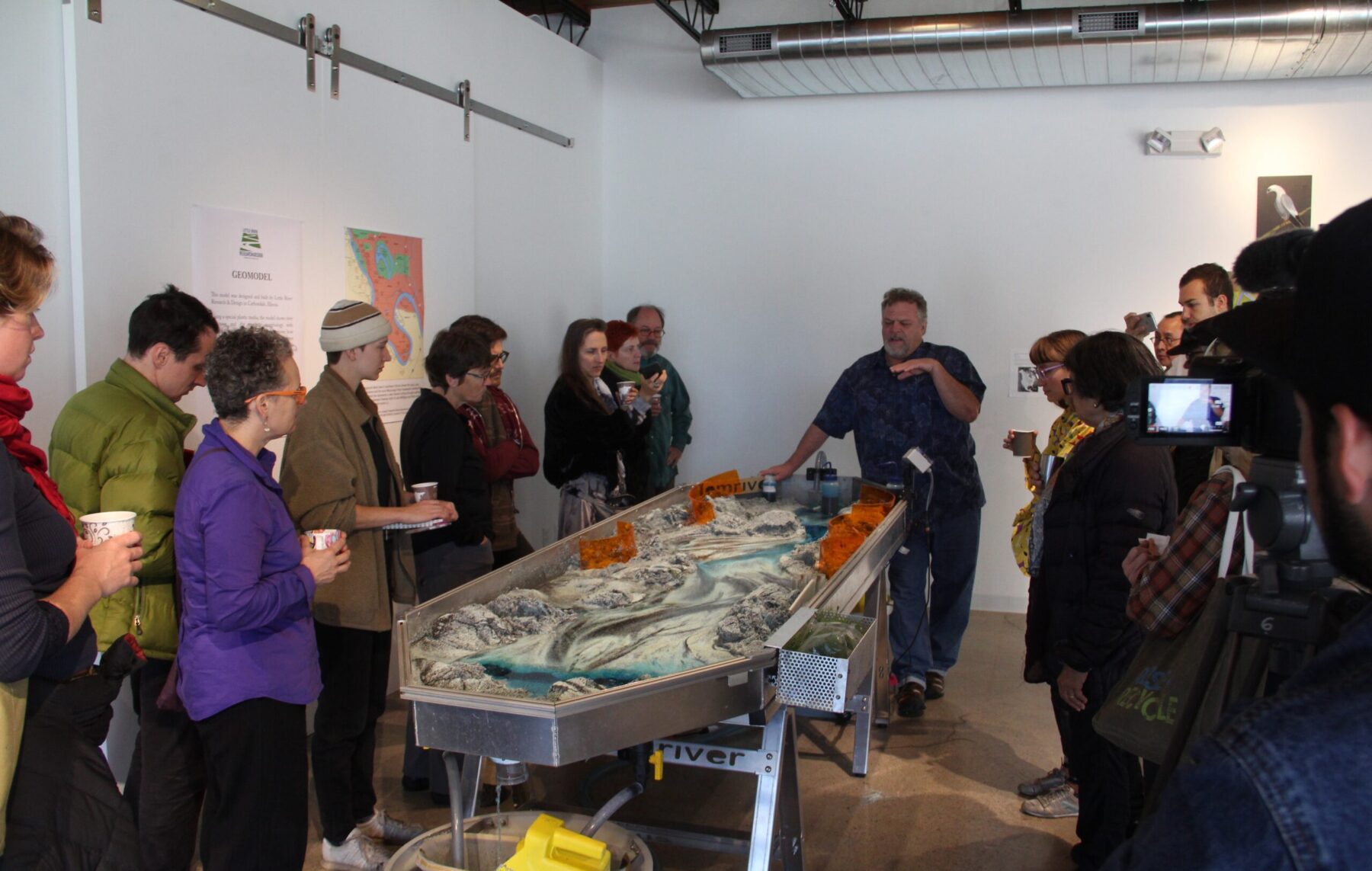
Emriver models are practical and useful installations for interactive museums, science centers, and visitor centers because they engage a variety of age groups by allowing hands-on interaction and visualization of how rivers work and how to conserve them. In these locations, the models also can serve as central, shared resources for local organizations, schools, and universities to host classes, workshops, and teacher training sessions.
Some Current Installations
- The Watershed Stewardship Center at West Creek Reservation, part of Cleveland Metroparks, uses an Em2 to teach the public about enhancing and protecting urban watersheds.
- The River Residency workshops at the University of Michigan’s Museum of Natural History use an Em3 to teach students about the interactions between humans and rivers.
- Japan has three Em2s in public settings: The Hamamatsu Science Center, Kanagawa Prefectural Museum of Natural History, and Izu Peninsula Geopark, one of dozens in the Japan Geopark Network.
- The United States’ wide network of national parks, wildlife refuges, and other public lands, along with their visitor centers and outreach programs, can benefit from the dynamic and interactive Emriver stream tables to show how rivers work and how to conserve them. Emriver models are used at the USGS Grand Canyon Monitoring and Research Center, the Silvio O. Conte National Fish & Wildlife Refuge, and the Bureau of Land Management office in Glen Allen, Alaska.
- SpectrUM Discovery Area
- The Louisiana Art & Science Museum uses their Em3 and Emflume1 to educate visiting classes about human-river interactions.
- Connecticut River Museum
- Watershed Stewardship Center in Cleveland, Ohio
- Science Museum Oklahoma
- Four Rivers Environmental Education Center in Will County, Illinois