K-12 STEM
River Models for K-12 STEM Education
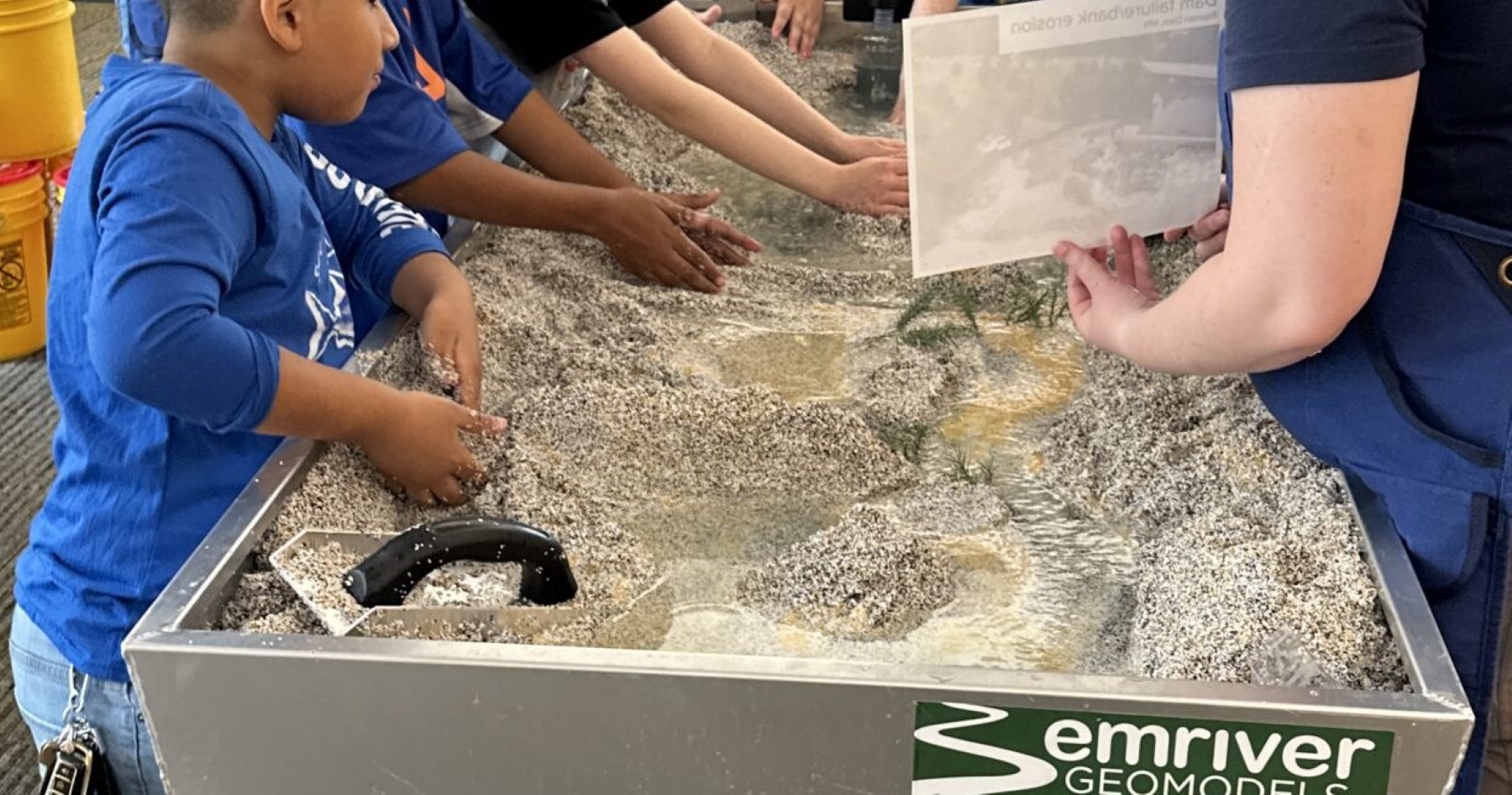
Emriver stream tables are dynamic and engaging hands-on laboratories that put science, technology, engineering, and math into action. An interdisciplinary approach to teaching how rivers work creates good stewards of natural resources and prepares students for careers in STEM fields. At least a dozen students can view and work with the Em2 stream table at the same time, and the larger Em3 and Em4 simulated river systems can be viewed by larger groups. Emriver stream tables engage students in lessons, experiments, and discussions about topics such as:
- Geology: Fluvial geomorphology, how rivers work, erosion, deposition, meandering, slope, channel migration, continuity
- Environmental science: How human activity impacts rivers, planning (e.g. developing in floodplains)
- Math: Measure stream flow and discharge, create and read hydrographs
- Engineering: How dams, culverts, and other structures affect rivers
- Technology: Use photogrammetry to create 3D models of a river system
Teaching and Demonstrations
- Little River’s Emriver Lab Manual contains lessons that can be adapted for the appropriate age group
- Stream Table Lesson Packet for grades 3-6 developed by Jennifer Guarino, Ecotone Education, and Larry Kasden, Ottauquechee Natural Resources Conservation District
- Watershed on Wheels Environmental Education Program: Lessons by Silvio O. Conte National Fish & Wildlife Refuge and the Vermont Institute of Natural Science:
Teach basic principles of river geomorphology, introduce vocabulary, review or introduce how water cycles through the environment, understand and explore how a river has formed since the last Ice Age, explore the concept of a watershed and properties of erosion.